





Solarglide Go Beyond Product Features To Address Next Generation Motorisation Screens
When it comes to managing window shading solutions on commercial vessels, cruise ships, ferries, and yachts, the evolution from manual to motorised systems represents more than just a technological upgrade. It’s a fundamental shift in how maritime professionals approach safety, efficiency, and crew welfare. Solarglide would like to take you through a comprehensive guide that explores everything you need to know about onboard motorisation for maritime blinds, from understanding the technology to making informed purchasing decisions.
Understanding Motorisation Technology in Maritime Environments
Motorisation in maritime blinds, refers to the integration of electric motor systems that control the raising, lowering, and positioning of blinds without manual intervention. Unlike residential motorisation systems, maritime motorisation must withstand unique challenges including constant vibration, salt-laden air, extreme temperature fluctuations, and the demanding safety regulations that govern commercial shipping. The core components of a motorised maritime blind system include the motor itself (typically housed within the roller tube or cassette), a power supply connection compatible with the vessel’s electrical system, control mechanisms (switches, remotes, or integration with ship systems), and increasingly, smart
automation features that can synchronise multiple blinds across different areas of a vessel. If you would like to hear more about this subject feel free to watch one of our in-depth motorisation videos right here – Watch Advanced Motorisation Technology
What sets maritime motorisation apart from land-based systems is the engineering that is required. These motors must operate reliably in conditions that would destroy standard residential motors within months. They’re designed to handle the constant motion of vessels athttps://www.youtube.com/watch?v=OdgRZhhsmvA&t=602s sea, resist corrosion from salt exposure, and maintain performance despite humidity levels that fluctuate dramatically as ships travel between different climate zones.

Motorised Blinds : Solarglide deep dive into advanced motorisation ©Solarglide All rights reserved.
The Business Case: Return on Investment for Solarglide Motorised Systems
Many ship operators initially hesitate when they see the price differential between manual and motorised blind systems. However, a thorough cost- benefit analysis often reveals that motorisation delivers compelling returns over the operational life of a vessel. Consider the labour costs associated with manual blind operation on a large cruise ship or ferry. Crew members spend valuable time adjusting blinds in passenger cabins, public spaces, and bridge areas. On a vessel with hundreds or thousands of windows, this represents significant person-hours that could be redirected to higher-value activities. Solarglide’s motorised systems eliminate this recurring labour expense entirely. Maintenance costs tell another important story. Manual blinds in maritime environments face constant wear from hands pulling chains, adjusting cords, and manipulating mechanisms. Components break, chains snap, and fabrics become soiled from repeated handling. Motorised systems that eliminate human contact dramatically reduce these wear patterns. As our blind specialist notes, zero human contact means the blind stays in better condition for longer periods. Energy efficiency provides another financial benefit that surprises many operators. Motorised systems can be programmed to respond automatically to solar conditions, lowering blinds during peak heat periods to reduce HVAC loads and raising them when solar gain becomes beneficial. This dynamic response to environmental conditions can reduce cooling costs substantially, particularly on vessels operating in tropical or subtropical routes. The safety and liability considerations also carry financial weight. Manual blinds in hard-to-reach locations create safety risks as crew members climb, stretch, or use improvised tools to adjust them. Any injury resulting from these activities creates direct costs in medical treatment and potential liability exposure. Motorisation eliminates these risks entirely by making every window easily
accessible via a control switch.
Safety and Operational Advantages in Bridge and Navigation Areas
The Ship’s Bridge or wheelhouse represents the most critical application for motorised blinds for marine on any vessel. Here, the combination of safety requirements and operational demands makes a compelling case for motorisation that extends
beyond simple convenience. Bridge officers face intense glare conditions that can compromise navigation safety. The ability to quickly adjust shading across multiple windows simultaneously allows them to maintain optimal visibility without leaving their
stations or diverting attention from navigation tasks. This rapid response capability becomes crucial during changing light conditions, when entering or leaving port, or when the sun angle suddenly creates dangerous glare on navigation screens. Solarglide Type Approved Solar Screens are specifically designed to reduce glare while maintaining visibility, but their effectiveness depends on the correct deployment.
Motorised systems ensure officers can make these adjustments instantly, with precision, and without physical exertion. During critical manoeuvring situations, this ease of operation can make the difference between clear visibility and compromised awareness. Bridge motorisation also supports better crew ergonomics and fatigue management. Officers working long watches, particularly during overnight passages followed by daytime navigation, benefit enormously when they can adjust their environment effortlessly.
Onboard Motorised blinds contribute to creating optimal working conditions that help maintain alertness and reduce eye strain, factors directly linked to navigation safety. The synchronisation capabilities of modern motorised systems offer additional operational benefits. Bridge blinds can be programmed to operate in coordinated groups, ensuring consistent light control across the entire bridge area with a single command. This consistency helps maintain proper adaptation as officers move around the bridge, reducing the visual stress caused by constantly adjusting to different light levels.

Solarglide brings Type Approved Certification into existence. ©Solarglide All rights reserved
Passenger Experience and Cabin Applications
In passenger vessels, the cabin experience fundamentally shapes customer satisfaction and repeat business. Motorised blinds contribute to this experience in ways that manual systems simply cannot match, particularly in the luxury yacht and cruise ship segments where expectations continually rise. Modern travellers expect hotel-level comfort and convenience. They’re accustomed to motorised shading in high-end hotels and resorts. When they encounter manual pull-chains or sidewinder mechanisms in their cabin, it immediately signals a lower standard of accommodation. Motorised blinds aligned with these evolving expectations can create an immediate impression of blind quality and thoughtfulness in design. The operational benefits for cabin stewards and housekeeping teams shouldn’t be overlooked. In vessels with hundreds of cabins, the ability to reset cabin blinds to standard positions without manually adjusting each one saves considerable time during turnover operations. Some advanced systems even allow housekeeping supervisors to check blind positions remotely and ensure cabins are prepared before passenger boarding. Privacy control becomes particularly important in the premium accommodation market.

Solarglide motorisation blinds installed within ship’s passenger areas. ©Solarglide All rights reserved
Passengers want the ability to control their environment precisely, whether seeking a complete Marine Blackout Screen for daytime sleep, partial shading for comfortable reading, or Dimout Blind Screens full visibility to enjoy sea views. Motorised systems deliver this control with fingertip ease, often through elegant remote controls or wall panels that integrate seamlessly with cabin aesthetics. The integration of motorised blinds with cabin management systems represents the cutting edge of passenger vessel design. Blinds that respond to preset “scenes” such as morning wake-up, evening relaxation, or sleep mode create an experience that feels personalised and responsive.
Power Options and Electrical Integration
Understanding the power options available for motorised maritime blinds can help operators make informed decisions that align with their vessel’s electrical infrastructure and operational requirements. The choice of power system affects installation complexity, ongoing maintenance, and system reliability. Hard-wired systems represent the most common approach for commercial vessels. These systems connect directly to the ship’s power supply, typically offering options for various voltage configurations to match different vessel electrical systems. The reliability of hard-wired systems makes them ideal for critical applications like bridge blinds where consistent operation is essential. Installation requires running power cables to each blind location, which is most easily accomplished during new construction or major refits, but can be retrofitted in existing vessels with careful planning. Battery-powered motorisation offers flexibility in locations where hard-wiring proves impractical or prohibitively expensive. Modern battery systems provide surprising longevity, with some requiring recharging only annually under typical usage patterns. These systems work particularly well in remote cabin locations,
observation areas, or spaces where power access is limited.

Motorised Blinds : Considerations For Marine Industry Decision Makers
The trade-off involves the ongoing requirement to monitor and maintain battery charge levels across potentially numerous blind units. Solar-powered motorisation represents an innovative solution that aligns with the maritime industry’s increasing focus on sustainability and energy efficiency. These systems incorporate small photovoltaic panels that harvest light energy to power the motor and maintain battery charge. In locations receiving adequate natural light, solar systems can operate indefinitely without connection to ship power or manual battery replacement. They’re particularly effective in guest areas with large windows or in locations where reducing power consumption supports broader energy management goals. Hybrid approaches that combine multiple power sources offer maximum flexibility. A system might use solar power as the primary source with battery backup for operation during extended dark periods, or it might connect to ship power while incorporating battery backup to maintain operation during power interruptions. These sophisticated systems provide the reliability of hard-wired operation with the resilience of independent power sources.
Control Systems: From Simple to Sophisticated For Motorised Blinds For Marine Environments
The control system represents the interface between users and motorised blinds, and the options range from elegantly simple to impressively sophisticated. Selecting the appropriate control approach depends on vessel type, user needs, and integration requirements with other ship systems. Individual switch control offers the most straightforward approach. Each blind receives a dedicated wall switch mounted nearby, allowing users to raise, lower, or stop the blind with simple button presses. This system works well in cabin applications where occupants control their own space, or in areas where blind operation remains relatively infrequent. The advantage lies in simplicity and reliability – there are no complex systems to malfunction and no learning curve for users. Remote control systems provide convenience and range, allowing users to operate blinds from anywhere in a space. Modern RF (radio frequency) remotes work through walls and obstacles, enabling bridge officers to adjust blinds without leaving their stations or passengers to control cabin blinds from bed. Multi-channel remotes can operate different groups of blinds independently, providing flexible control over complex spaces. Centralised control panels consolidate multiple blind operations into a single interface. On a bridge, a control panel might display all bridge blinds with individual controls for each, plus group controls that operate all port-side, starboard, forward, or aft blinds simultaneously. These panels often integrate into the bridge console design, providing at-a-glance status information and intuitive control that supports rapid response during operations. Integration with ship management systems represents the most sophisticated control approach. Blinds become nodes on the vessel’s digital network, controllable through the same interfaces used to manage lighting, HVAC, and other environmental systems. This integration enables advanced programming like automatic responses to time of day, weather conditions, or operational states. In passenger vessels, it allows coordination between blinds and entertainment systems, lighting scenes, and other comfort features
Installation Considerations and Best Practices For Motorised Marine Blinds
Successful motorisation implementation requires careful planning that addresses both technical requirements and operational realities. Whether retrofitting existing manual blinds or specifying motorisation in new construction, certain considerations consistently prove crucial to project success. Timing represents a critical factor in motorisation projects. New vessel construction provides the ideal opportunity to specify motorised systems from the outset, allowing power infrastructure to be planned into the building process and avoiding the complications of retrofit work. For existing vessels, major refit periods offer the best window for motorisation upgrades, when spaces are already partially disassembled and access is maximised. Power infrastructure planning begins with understanding your vessel’s electrical system and ensuring motor specifications match available voltage. The placement of power connection points affects installation costs significantly, as running new power drops to distant blind locations adds expense and complexity.
Some installations benefit from establishing power zones with readily accessible connection points serving multiple nearby blinds. Physical space considerations matter more than many operators initially realise. Motorised blind systems require slightly more mounting depth than manual systems to accommodate the motor housing. In retrofit situations, this occasionally creates conflicts with existing window frames or reveals. Measuring carefully and confirming clearances before ordering prevents costly modifications or system changes mid-project. Synchronisation requirements should be determined during the planning phase. Groups of blinds that should operate together, whether for functional or aesthetic reasons, need their control systems specified accordingly. This coordination affects both the control interface design and the programming requirements for the motor systems. Testing protocols deserve attention in the specification phase. Clear acceptance criteria should be established covering blind positioning accuracy, noise levels during operation, synchronisation performance when applicable, and response times. These criteria provide objective standards for validating installation quality and identifying any issues before the vessel returns to service.
Maintenance and Lifecycle Management For Onboard Motorisation
Motorised blind systems require different maintenance approaches than manual systems, but properly maintained motorised systems often deliver longer service life and better performance over time. Understanding these maintenance requirements helps operators maximise their investment and minimise unexpected failures. Regular inspection schedules should include checking for unusual noises during operation, which can signal developing motor problems or mechanical binding. Visual inspection of blind fabric for damage or distortion identifies issues before they affect motor operation. Control systems should be tested periodically to verify all switches, remotes, and automated functions work as intended.
Mechanical components require minimal, but important attention. Ensuring the blind fabric rolls evenly onto the tube prevents edge damage and operational problems. Side channels or cable guides that keep fabric tracking properly should be checked for damage or excessive wear. Mounting brackets and cassette housings need verification that they remain securely attached, as vibration over time can loosen fasteners. Electrical maintenance focuses on connection security and power supply reliability. Terminals should be checked for corrosion, particularly in areas exposed to salt air. Battery-powered systems need periodic battery replacement according to manufacturer schedules. Solar systems benefit from periodic cleaning of photovoltaic panels to maintain charging efficiency. Motor systems generally require minimal direct maintenance but benefit from operational monitoring. Tracking cycle counts on heavily-used blinds helps predict when motor replacement might become necessary. Noting any decline in operating speed or smoothness provides early warning of developing problems. Most quality motors provide thousands of cycles before needing attention, but this assumes the correct installation and operating conditions. Documentation proves invaluable for maintenance management. Maintaining records of installation dates, motor specifications, control system configurations, and maintenance activities for each blind location creates an information resource that simplifies troubleshooting and supports parts ordering. This documentation becomes particularly valuable during crew changeovers or when bringing in external service providers.
Cost Analysis: Making the Investment Decision
Understanding the full cost picture for motorised blind systems requires looking beyond initial purchase price to consider the total cost of ownership over the vessel’s operating life. This comprehensive view often reveals that motorisation delivers value that justifies the premium over manual systems. Initial investment costs for motorisation systems typically run 1.5 to 3 times the cost of equivalent manual systems, depending on the sophistication of controls and the power system selected. This upfront cost understandably creates sticker shock, but it represents only one element of the financial equation. Labour savings accumulate throughout the vessel’s operating life. On passenger vessels, reduced housekeeping time for cabin preparation, eliminated crew time adjusting hard-to-reach blinds, and reduced maintenance time from fewer mechanical failures all contribute to ongoing savings. Calculating these savings at prevailing maritime labour rates over a 20-year vessel life often shows labour savings alone justifying much of the motorisation premium. Maintenance cost differences favour motorised systems that receive the correct care. Manual systems face continual wear from human contact, with chains breaking, fabrics soiling, and mechanisms wearing from repeated operation. Motorised systems eliminate much of this wear, extending service intervals and reducing parts replacement. At a glance – best blinds for your ship smart budgeting
While motor replacement eventually becomes necessary, the intervals between major maintenance often exceed those of manual systems requiring periodic rebuild of operation mechanisms. Energy savings from programmable operation, particularly in climate-controlled spaces, provide quantifiable benefits. The ability to lower blinds automatically during peak solar gain periods reduces cooling loads measurably. While individual savings per cabin are modest, aggregated across an entire vessel over years of operation, these savings contribute meaningful amounts to the return on investment calculation. Downtime costs and opportunity costs deserve consideration in commercial operations. Manual blinds in high-traffic passenger areas that fail or become unsightly from wear detract from the passenger experience and potentially from repeat business. Bridge blinds that fail during critical operations create safety exposures. The reliability and extended service life of quality motorised systems reduce these operational risks. Residual value implications affect vessels facing eventual sale. Modern buyers, particularly in the cruise and luxury yacht segments, expect motorisation as a baseline amenity. Vessels with motorised systems maintain stronger resale values and face less resistance from potential buyers compared to vessels requiring retrofitting.
Selecting the Right Motorisation Solution for Your Vessel
Making informed decisions about motorisation requires matching system characteristics to your specific vessel type, operational requirements, and budgetary constraints. No single solution fits all applications, but understanding key decision factors guides you toward the optimal choice for your circumstances. Vessel type fundamentally shapes motorisation requirements. Commercial cargo vessels operating with minimal crew prioritise reliability and robust operation in harsh conditions, typically favouring straightforward hard-wired systems with simple controls. Cruise ships need systems that support passenger experience expectations while handling high cycle counts, suggesting sophisticated control integration and premium reliability. Ferries balance commercial operation requirements with passenger accommodation needs, often implementing tiered approaches with different motorisation levels in different areas. Luxury yachts demand premium aesthetics and seamless integration with sophisticated onboard systems, justifying the highest levels of control sophistication and customisation. Budget realities require honest assessment of both available capital and willingness to invest for long-term benefit. For vessels with limited capital budgets, strategic partial motorisation focusing on high-impact areas like the bridge and premium passenger accommodations delivers the most benefit per dollar invested.
Phased implementation approaches allow spreading costs across multiple budget cycles while building toward comprehensive motorisation over time. Operational priorities guide feature selection. Vessels where crew safety is paramount, such as those operating in extreme weather conditions, benefit most from motorisation in hard-to-access areas and bridge locations. Passenger-focused vessels should prioritise cabin and public space motorisation that directly affects the guest experience. Efficiency-focused operations might emphasise programmable automation that optimises energy use. Maintenance capability influences system selection. Vessels with sophisticated maintenance teams and comprehensive spare parts inventories can effectively operate more complex systems with advanced features. Operations with limited technical support might favour simpler systems that sacrifice some sophistication for straightforward troubleshooting and basic parts requirements. Future-proofing considerations suggest over-specifying slightly to accommodate evolving expectations and enable future expansion. Installing control infrastructure with capacity for additional blinds, specifying motors with cycle ratings exceeding expected use, and selecting systems compatible with emerging control protocols provide flexibility for future modifications without requiring complete system replacement.
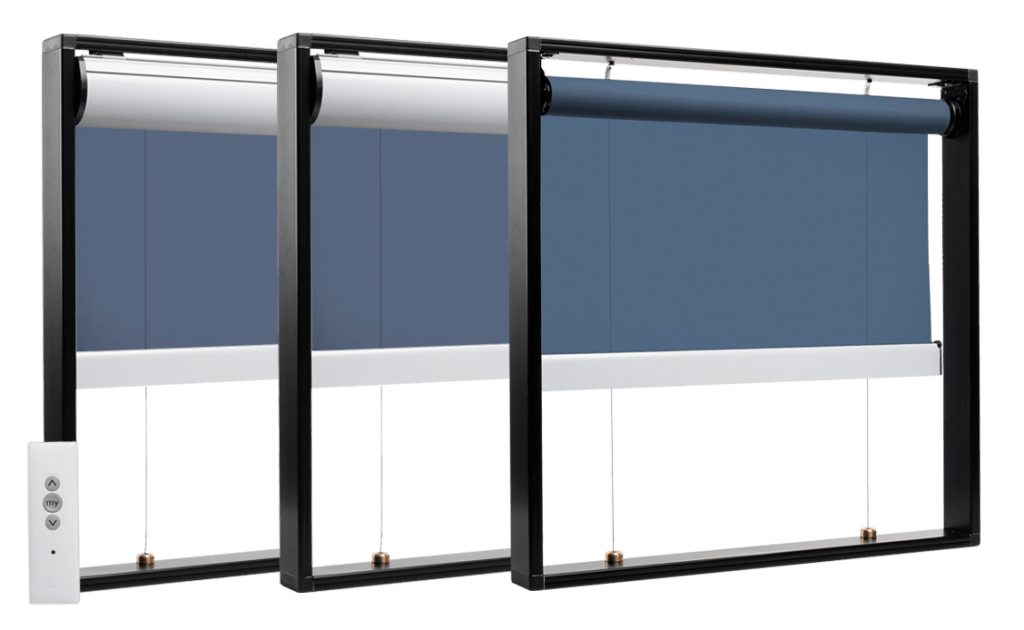
Solar Screens. Motorised, Hard-Wired & Non Cassette Solar Screens. ©Solarglide All rights reserved
Regulatory Compliance and Type Approval
Maritime blinds, whether manual or motorised, operate within a comprehensive regulatory framework designed to ensure safety, particularly in passenger-carrying vessels. Understanding these requirements is essential for specification and purchasing decisions.
Type Approval Certification represents the maritime industry’s gold standard for component verification. Solarglide’s Type-approved blinds have undergone testing by classification societies to verify they meet relevant maritime safety standards. For motorised systems, this testing extends beyond the blind itself to include electrical components, motor systems, and control equipment. Specifying Type Approved motorised blinds provides assurance that all system components meet applicable safety standards. International Maritime Organisation (IMO) standards establish global baseline requirements for marine equipment, including flame-retardancy specifications for blind fabrics, electrical safety standards for motors and control systems, and operational requirements for equipment in critical spaces like bridges. Motorised blind systems must demonstrate compliance with these standards to gain acceptance on internationally-trading vessels. Classification society requirements from organisations like Lloyd’s Register, Bureau Veritas, and others add another layer of standards that vessels must meet. These requirements can vary between classification societies and affect blind specifications, particularly for electrical components and installation methods. Ensuring your motorised blind supplier understands and meets your vessel’s classification society requirements prevents costly compliance issues. Flag state regulations introduce additional variables, as different maritime nations maintain specific requirements for vessels under their flags. Some flag states have adopted additional stringency beyond international standards, particularly for passenger vessels.

Solarglide. First company to acquire Lloyds Register Type Approved Certification.
Red Ensign Approval, required for vessels sailing under UK registration, represents one such enhanced standard that extends testing requirements beyond baseline international standards. MED (Marine Equipment Directive) compliance affects vessels operating in European waters, establishing specific requirements that must be met for equipment on EU-flagged vessels or vessels regularly calling at EU ports. MED approval involves rigorous testing to standards that often exceed basic type approval requirements. Working with blind suppliers experienced in navigating this regulatory landscape proves invaluable. Established maritime blind manufacturers understand these various approval schemes and can provide documentation demonstrating compliance with applicable standards. They can guide specification decisions to ensure chosen systems meet your regulatory requirements while delivering desired functionality.

Solarglide Red Ensign approved motorised blackout blinds for ships. ©Solarglide All rights reserved
Future Trends in Maritime Blind Motorisation
The motorisation of maritime blinds continues to evolve, with several emerging trends pointing toward the future direction of this technology. Understanding these trends helps operators make decisions that position vessels to benefit from coming innovations. Smart automation and artificial intelligence are beginning to influence blind control systems. Advanced sensors that monitor light levels, UV intensity, and thermal conditions enable blinds to respond automatically to changing environmental conditions. Machine learning algorithms can optimise blind positioning based on historical data, learning patterns that maximise comfort while minimising energy consumption. These systems promise to deliver the benefits of motorisation without requiring constant user input, creating environments that adapt seamlessly to the specific condition. Integration with broader vessel management systems continues to deepen. Future vessels will likely feature comprehensive environmental control where blinds, lighting, HVAC, and other systems communicate and coordinate to maintain optimal conditions efficiently.
This integration extends to predictive maintenance systems that monitor motor performance, track cycle counts, and alert maintenance teams to developing issues before failures occur. Wireless power transmission technology, while still emerging, could eventually eliminate the wiring challenges that complicate blind motorisation retrofit projects. Research into RF power transmission and advanced energy harvesting techniques might enable motorised blinds that require no power infrastructure beyond a central transmitter, dramatically simplifying installation and expanding motorisation feasibility to previously impractical locations. Sustainable materials and energy efficiency continue gaining importance across the maritime industry. Future motorised blind systems will likely incorporate more recycled materials in their construction, utilise ultra-efficient motors that minimise power consumption, and integrate with renewable energy systems aboard vessels. Solar-powered motorisation represents an early step in this direction, with more sophisticated energy-harvesting approaches on the horizon. User interface evolution will make motorised blind control more intuitive and accessible. Voice control integration, gesture recognition, and augmented reality interfaces that let users visualise blind positions and effects before implementing changes will make advanced motorisation features accessible to all users, not just technically-sophisticated operators. Modular and upgradeable designs will enable extending system life cycles while incorporating new capabilities. Rather than complete system replacement when technology advances, modular motors and control systems will allow upgrading specific components to access new features while retaining the basic mechanical systems. This approach reduces replacement costs and supports sustainability goals by extending equipment service life.
Making the Decision: Is Motorisation Right for Your Vessel?
After exploring the technology, benefits, costs, and considerations surrounding maritime blind motorisation, the question remains: should your vessel invest in motorised systems? The answer depends on honest assessment across several key dimensions. New construction projects represent the most compelling case for motorisation. The incremental cost addition during building proves much smaller than retrofit costs, power infrastructure installs easily as part of construction electrical work, and modern owners and charterers increasingly expect motorisation as standard. For new builds in competitive markets, manual blinds increasingly represent a specification liability that affects sales appeal and resale value. Existing vessels facing major refits should seriously evaluate motorisation, particularly in high-impact areas.
The disruption and access opportunities inherent in major refits minimise the complications that make motorisation retrofits challenging at other times. Focusing on bridge areas, premium passenger accommodations, and locations with accessibility challenges delivers maximum benefit from available refit budgets. Vessels with chronic blind maintenance issues or accessibility problems find compelling reasons for motorisation. If your maintenance logs show recurring blind failures, crew safety incidents related to blind adjustment, or passenger complaints about blind operation, motorisation directly addresses these documented problems. The business case becomes clear when motorisation eliminates known issues affecting operations or customer satisfaction. Operations competing in premium market segments should view motorisation as essential rather than optional. Passenger expectations in luxury cruise, premium ferry, and yacht charter markets now include motorised blinds among baseline amenities. Manual systems increasingly register as substandard in customer perception, affecting satisfaction scores and repeat business. Budget-constrained operations can still benefit from strategic motorisation. Implementing systems in the highest-impact locations, even if comprehensive motorisation remains unaffordable, delivers disproportionate benefits.
Bridge motorisation enhances safety and operational efficiency. Premium cabin motorisation supports commanding higher rates for those accommodations. Taking a phased approach, adding motorisation during normal replacement cycles for failed manual blinds, gradually builds toward comprehensive coverage without requiring large capital outlays. The fundamental question is not whether motorisation delivers benefits, as the evidence overwhelmingly demonstrates that it does across multiple dimensions. The real question is whether those benefits justify the investment given your vessel’s specific circumstances, operational model, and financial constraints. For the majority of vessels in commercial service today, particularly those serving passengers or operating in competitive markets, motorisation represents a sound investment that pays dividends throughout the vessel’s operating life.

Motorised Blinds for marine : Considerations For Marine Industry Decision Makers
The Conclusion For Motorised Blinds For Marine Environments
Onboard motorisation of maritime blinds has evolved from a luxury feature to an increasingly standard expectation across the commercial shipping industry. The technology delivers clear benefits in safety, operational efficiency, maintenance reduction, energy conservation, and user experience. While initial costs exceed manual systems, total cost of ownership analysis typically favours motorisation when all factors receive considerable consideration. The diversity of available motorisation approaches, from simple hard-wired systems to sophisticated networked solutions with automated control, means solutions exist for vessels across the operational spectrum.
Whether you operate cargo vessels, ferries, cruise ships, or luxury yachts, motorisation options can be tailored to your specific requirements and constraints. As with any significant vessel system investment, success with blind motorisation requires careful planning, informed specification, proper installation, and ongoing maintenance. Working with experienced maritime blind suppliers who understand both the technology and the regulatory environment ensures that investments deliver expected benefits and avoid common pitfalls. The future points clearly toward increasing adoption of motorised blind systems. As technology continues to advance, costs moderate, and user expectations evolve, motorisation will become the expected standard rather than a premium option. Vessels investing in motorisation today position themselves advantageously for this future while capturing immediate operational benefits. For vessel operators, owners, and specifiers evaluating blind systems for new construction, retrofit, or replacement projects, motorisation deserves serious consideration. The comprehensive benefits extend across safety, efficiency, comfort, and operational effectiveness, affecting crew welfare, passenger satisfaction, and bottom-line profitability. While not every vessel requires the most sophisticated motorisation options available, few vessels wouldn’t benefit from at least strategic motorisation in key areas. The question is no longer whether motorisation makes sense for maritime blinds, but rather how to implement it most effectively for your specific vessel and operational requirements.
Solarglide Limited have provided the information foundation for making those informed decisions. The next step is working with experienced suppliers to translate this knowledge into specific solutions that serve your vessel well for years to come. For more information on motorised blind solutions specifically designed for maritime applications, including Type Approved systems compliant with international safety standards, contact Solarglide Limited. With decades of experience in maritime blind manufacturing and a comprehensive range of manual and motorised solutions, Solarglide helps vessel operators worldwide find the right balance of functionality, safety, and value for their specific needs.
If you need further clarification or guidance during your motorised blind installation, don’t hesitate to speak to the Solarglide team. Their expert support can help ensure everything is set up safely, correctly, and in line with best practices. theteam@solarglide.com
Other Motorisation titles within the Solarglide blog that you may like –
Electrical Know How For Blind Installers
Why Motorised Blinds Are A Game Changer
Have you got a maritime story you would like to share with the Solarglide team? Contact cliff@solarglide.com
All images are © Solarglide Limited. All Rights Reserved.
https://www.vecteezy.com/free-photos/business